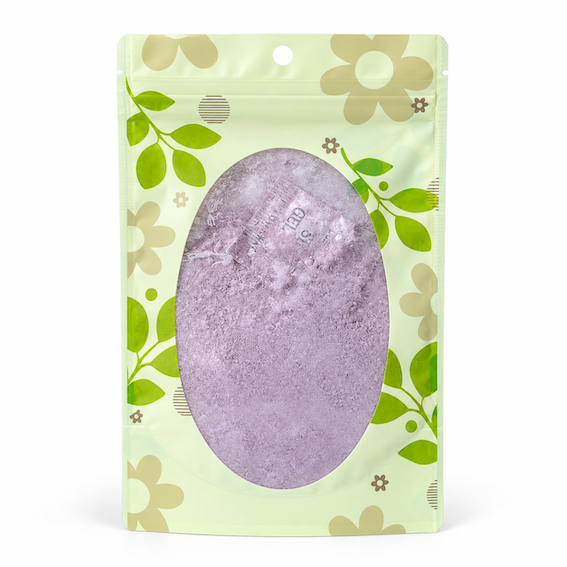
Description
Dried Red Cabbage Powder – Colour-Changing Science!
Turn ordinary water into a colourful chemistry investigation! Make your own red cabbage pH indicator and discover how everyday acids and alkalis change its colour.
Perfect for supervised experiments at home, classroom investigations and science clubs. Predict, test, compare and e xplore the science behind the colour changes!
Choose your pack size
- 1 × 20 g sachet — £2.50
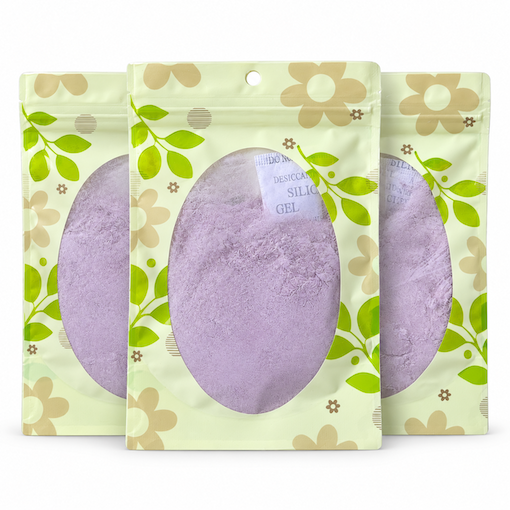
- 3 × 20 g sachets — £6.50
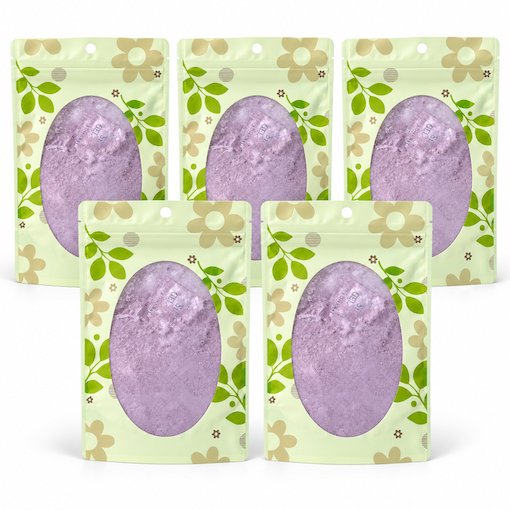
- 5 × 20 g sachets — £10.50
A pH colour card is included.
Ingredients: 100% dried, powdered red cabbage.
Botanical name: Brassica oleracea L.
For science activities only. Not for human consumption.
Make your indicator
Each 20 g sachet makes approximately 1 litre of indicator at the suggested concentration.
- Stir 10 g of powder into 500 ml of warm water.
- Allow the colour to develop and the mixture to cool.
- Let the cabbage particles settle, then pour off the coloured liquid. For a clearer indicator, filter it through a coffee filter.
- Divide the indicator between small, clear containers, ready to investigate!
Want darker colours? Use more powder or less water.
Want lighter colours? Add more water.
Try a colour-changing investigation
Compare separate samples of your indicator:
- Add a little vinegar or lemon juice to one sample.
- Add a little baking soda dissolved in water to another.
- Keep a third sample unchanged for comparison.
What do you predict? What changes can you see? Use your colour card as an approximate guide.
Science in a nutshell
Red cabbage contains anthocyanins: pigments also found in red apple skins, purple grapes, plums and some red autumn leaves.
These pigments change colour depending on how acidic or alkaline their surroundings are. That makes red cabbage a natural pH indicator!
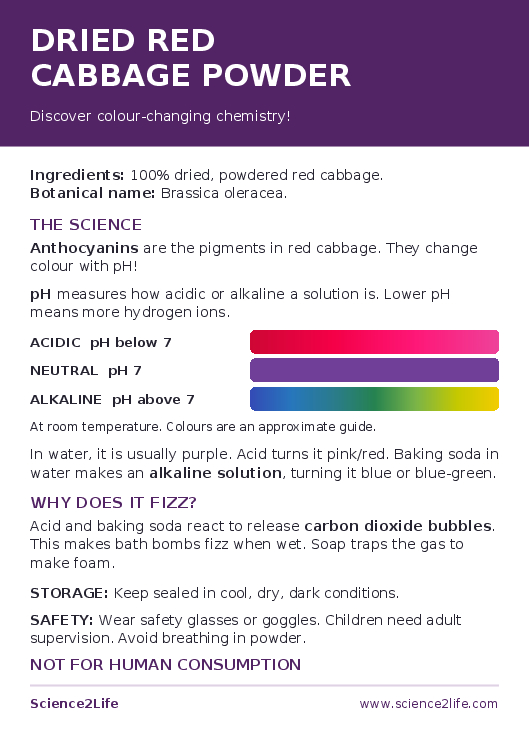
At room temperature:
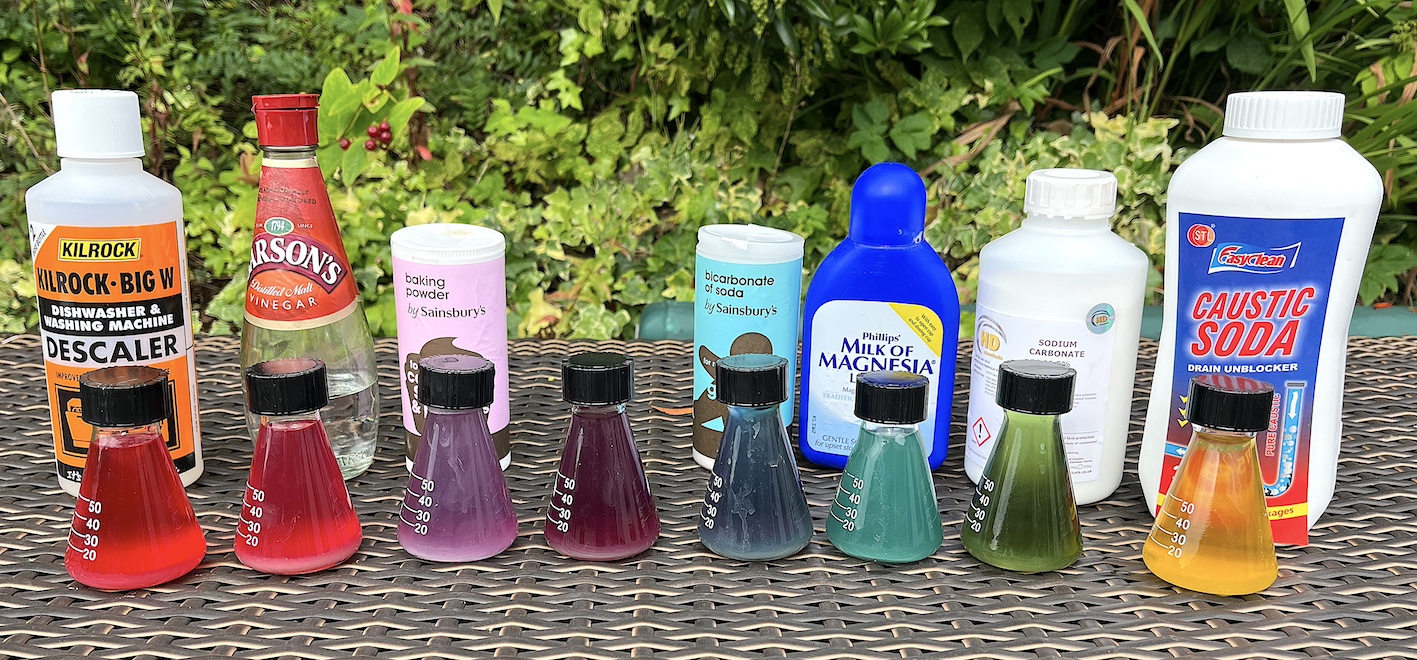
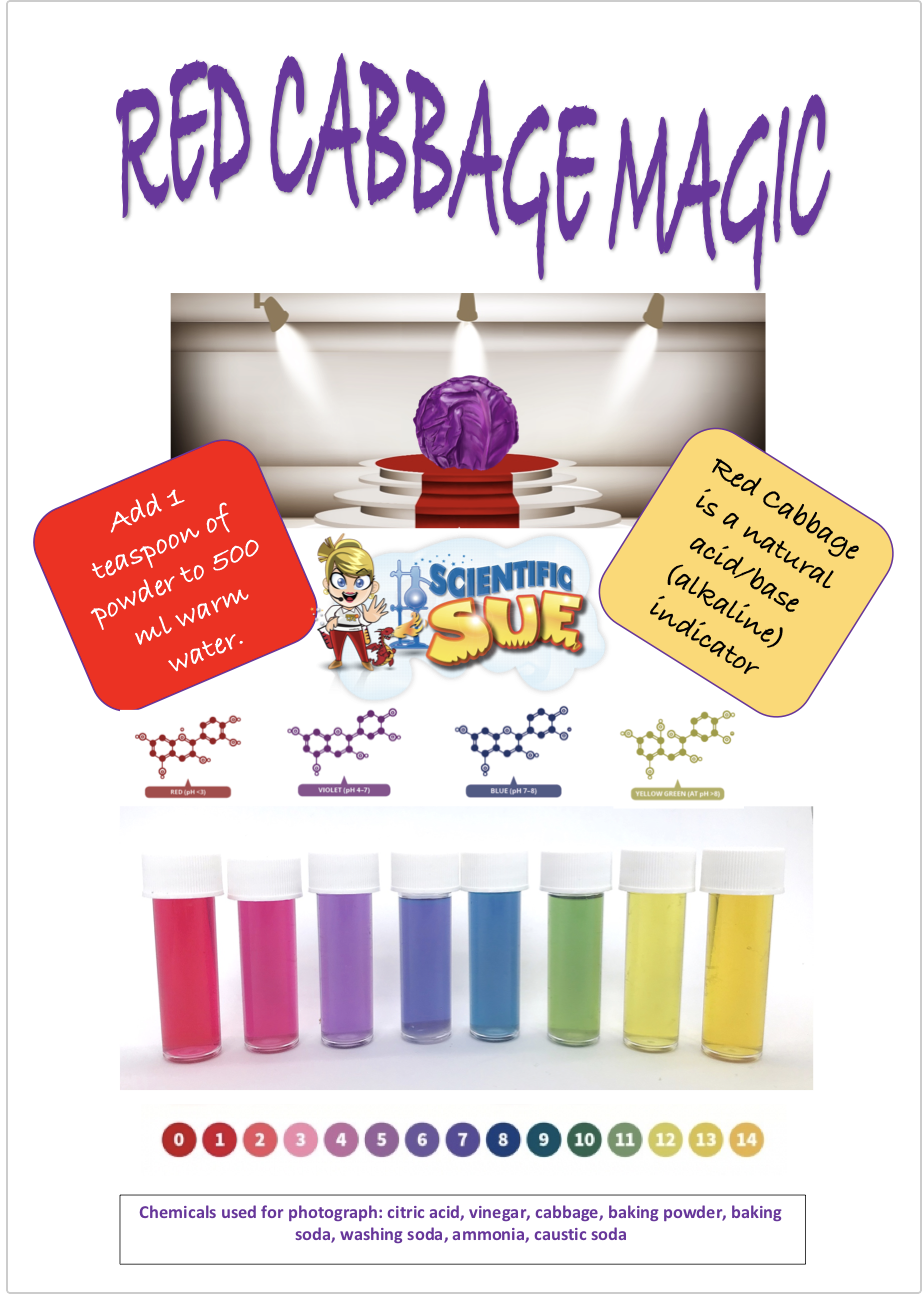
Red cabbage pH indicator experiment showing colour changes from acid to alkali using common household items.
- Acidic solutions: pH below 7; typically pink or red.
- Neutral solutions: pH 7; typically purple.
- Alkaline solutions: pH above 7; typically blue, green or yellow as alkalinity increases.
The exact colour varies with the indicator’s concentration and the substance being tested. This is a colour guide, not a precise pH measurement.
What does pH tell us?
pH is linked to hydrogen ions in a solution. Lower pH means more hydrogen ions and greater acidity.
Why does it fizz?
Vinegar contains ethanoic acid, also called acetic acid. Baking soda is sodium hydrogencarbonate, also called sodium bicarbonate.
When they react, they produce a salt, water and carbon dioxide gas. The escaping gas makes the bubbles!
The final colour depends on how much acid and baking soda you use—it will not always be purple or neutral.
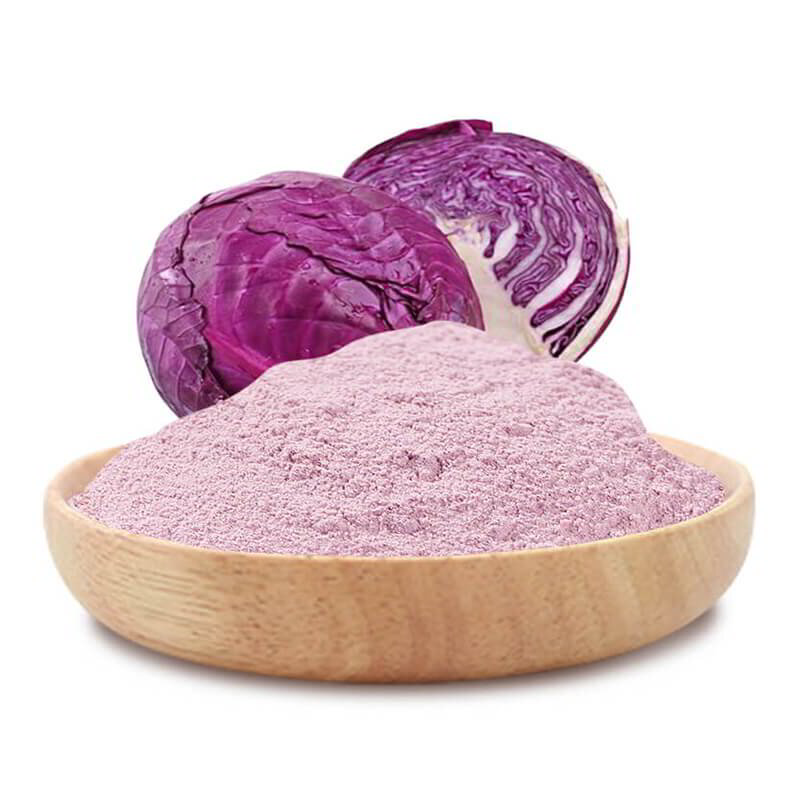
Red Cabbage Powder
Bath-bomb connection: Citric acid and baking soda create the fizz when a bath bomb gets wet. Soap can trap gas bubbles to make foam, but it is not needed for the fizzing reaction.
Save some science for later
Unused indicator can be frozen in a clearly labelled, dedicated ice-cube tray. Scientific Sue freezes hers in small portions and thaws a cube when she needs it!
Keep it separate from food and label it “Science indicator — do not eat or drink.”
Store the dry powder sealed in cool, dry, dark conditions.
Experiment safely
- Wear properly fitting safety goggles.
- Children must have adult supervision.
- Use small quantities and work on a tray to catch spills and fizz.
- Avoid breathing in the powder and wash your hands afterwards.
- Do not taste the powder or any experimental mixture.
- For these activities, use vinegar, lemon juice and baking soda. Do not use bleach, drain cleaners, caustic soda or ammonia.
- Never seal a fizzing reaction in a closed container.
For parents and teachers
Explore the science behind the colour changes with Scientific Sue’s educational video, covering the chemistry and safety considerations.
Watch Scientific Sue’s red cabbage science video
Some substances shown in demonstrations are unsuitable for children’s hands-on experiments. Follow the simple investigation and safety guidance above.