
The Science of Dragons & Vikings
Train Your Dragon with Science!
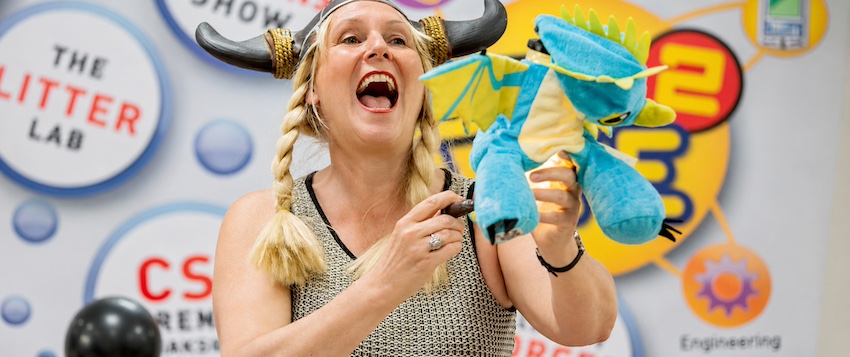
What does it take to get a dragon flying? Scientific Sue has a few ideas…
There’s a Viking celebration about to begin, but one baby dragon has a problem. How do you join the other dragons in the sky when you haven’t learnt to fly?
Scientific Sue needs a crew of trainee Vikings!
Inspired by Cressida Cowell’s How to Train Your Dragon books, this interactive science show takes audiences into Sue’s Viking laboratory. There’s a colour-changing dragon to investigate, a Gronckle to train and a Viking ship on the horizon. Keep an eye on those rocks. Meatlug has plans for them…
Inside Sue’s Viking laboratory

How is Stormfly feeling today?
Volunteers join Sue on stage as trainee dragon handlers. The rest of the crew have a job to do from their seats. Watch closely, predict what will happen and look for the clue that explains each dragon’s peculiar talent.
Can you tell what mood Stormfly is in?
If you want to know how Stormfly is feeling, take a look at her scales. They change colour with her mood! A trainee Viking joins Sue to investigate how a material can change colour right before your eyes. Then there’s the trickiest dragon-spotting question of all. How would you spot a dragon that could blend into its surroundings?
What has Meatlug been eating?
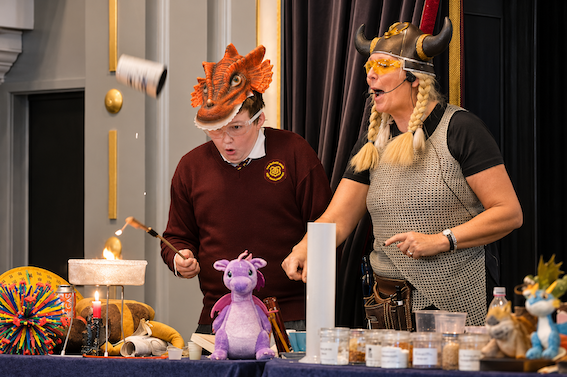
One flying cup and one very surprised dragon trainer!
A Viking ship has been spotted, and Meatlug, Sue’s rock-spitting Gronckle, needs a little target practice. A volunteer helps with the dragon training, but the real surprise is in the ammunition. One of Sue’s “rocks” has started to fizz. What’s making those bubbles, and what does that mean for the Vikings on board?
Can a baby dragon learn to fly?
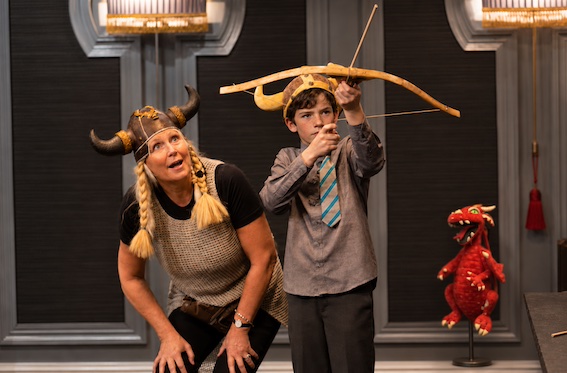
Look up! Can our young Viking catch the flying dragon with his crossbow?
Back to our smallest dragon. Gravity is pulling it towards the ground, so where could an upward force come from? Sue and her trainee Vikings put their engineering ideas to the test. Will their baby dragon get airborne in time to join the celebrations?
What science will pupils explore?
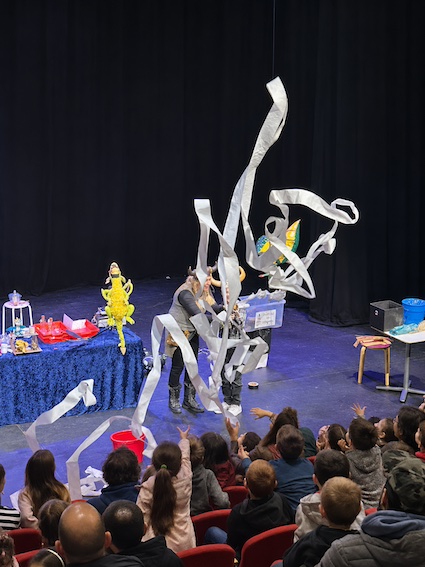
How high will they go? Even the front row gets caught up in this experiment!
Sue chooses the demonstrations and questions to suit the audience. Topics can include:
- Forces and flight — gravity, moving air, balance and buoyancy. What has to happen for a dragon to rise or stay in the air?
- Materials and colour change — how an indicator changes colour in acidic and alkaline solutions, and what those colours can tell us.
- Chemical reactions and gases — what fizzing tells us about a reaction and how scientists distinguish between gases such as hydrogen, oxygen and carbon dioxide.
- Energy and combustion — what a flame needs to keep burning and how chemistry helps explain a fire-breathing dragon’s party trick.
- Literacy and scientific enquiry — choosing a dragon’s talent from a story, turning it into a question and using observations to work out what might explain it.
Bring the dragons to your venue
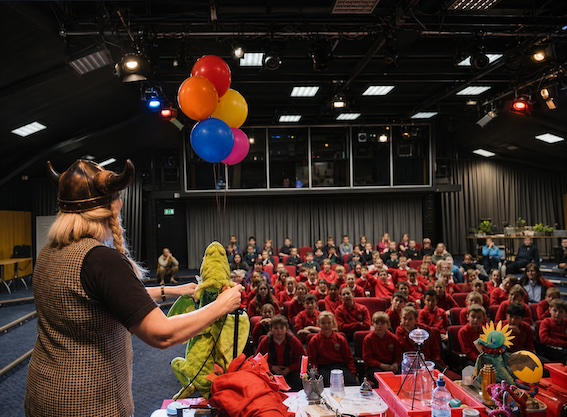
A dragon’s-eye view! Scientific Sue and her green dragon meet a theatre full of young scientists.
The Science of Dragons & Vikings is available for schools, theatres, festivals and family events. Younger Vikings might describe the first change they spot in Stormfly’s scales. Older pupils might suggest a test to find out what caused it. At a family show, everyone can join in, whether they know all twelve books or are meeting their first Gronckle.
Planning your visit
- Show length — 50 minutes.
- Set-up time — please allow 70 minutes before the first performance.
- Pack-down time — please allow 50 minutes after the final performance.
Please have two sturdy trestle tables in position before Scientific Sue arrives. Together, they should provide approximately 3 metres of table space so Sue can begin setting up straight away.
Flame and smoke effects
The show includes brief, controlled flame effects and a small amount of smoke from a flame demonstration and a theatrical smoke machine.
If your performance space has a low ceiling, sensitive smoke detectors or restrictions on the use of flame or smoke, please mention this when you enquire. Sue will discuss the effects with your premises manager or technical lead so you can agree which demonstrations are suitable before confirming the booking.
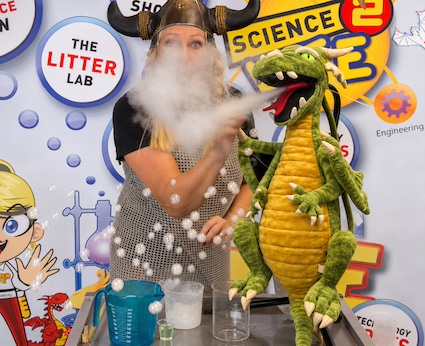
Some dragons breathe fire. When dry ice joins the show, this one has a rather different talent. Meet the bubble blower!
Optional icy dragon breath: If you’d like to include the dry-ice fog demonstration, ask Sue about it when you enquire. This effect carries an additional charge.
Teaching notes for your classroom
Sue will send your teaching notes once your booking is confirmed. Use them to plan how your pupils can revisit the science of dragon flight, colour changes and fizzing reactions in their own classroom.
Enquire about a visit
Tell Sue your preferred date, venue, audience size and age range. If your class is reading How to Train Your Dragon, tell her where you are in the story. If you’re exploring flight, forces or chemical reactions, she’d love to hear about that too.