
Description
STORM IN A BALLOON | Static Electricity Activity Kit
A Science2Life Original
Create your own miniature storm inside a balloon! This original Science2Life activity uses static electricity and polystyrene beads to explore electric forces, charge and the science behind thunderstorms.
Storm in a Balloon is an original Science2Life activity created by Scientific Sue. This unique demonstration combines creativity, curiosity and hands-on science to explore static electricity, electric forces and even the science behind thunderstorms and lightning.
From chaos to calm – make your own mini ‘snow’ storm then be wowed by static magic!
A fantastic demonstration which can be used to visualise the fact that like charges push against each other and opposite charges pull together.
It is also a fun and creativity demonstration that can be used to help explain how lightning is formed in clouds!
TRANSPARENT LATEX BALLOONS 5 PACK with a small bag of polystyrene beads
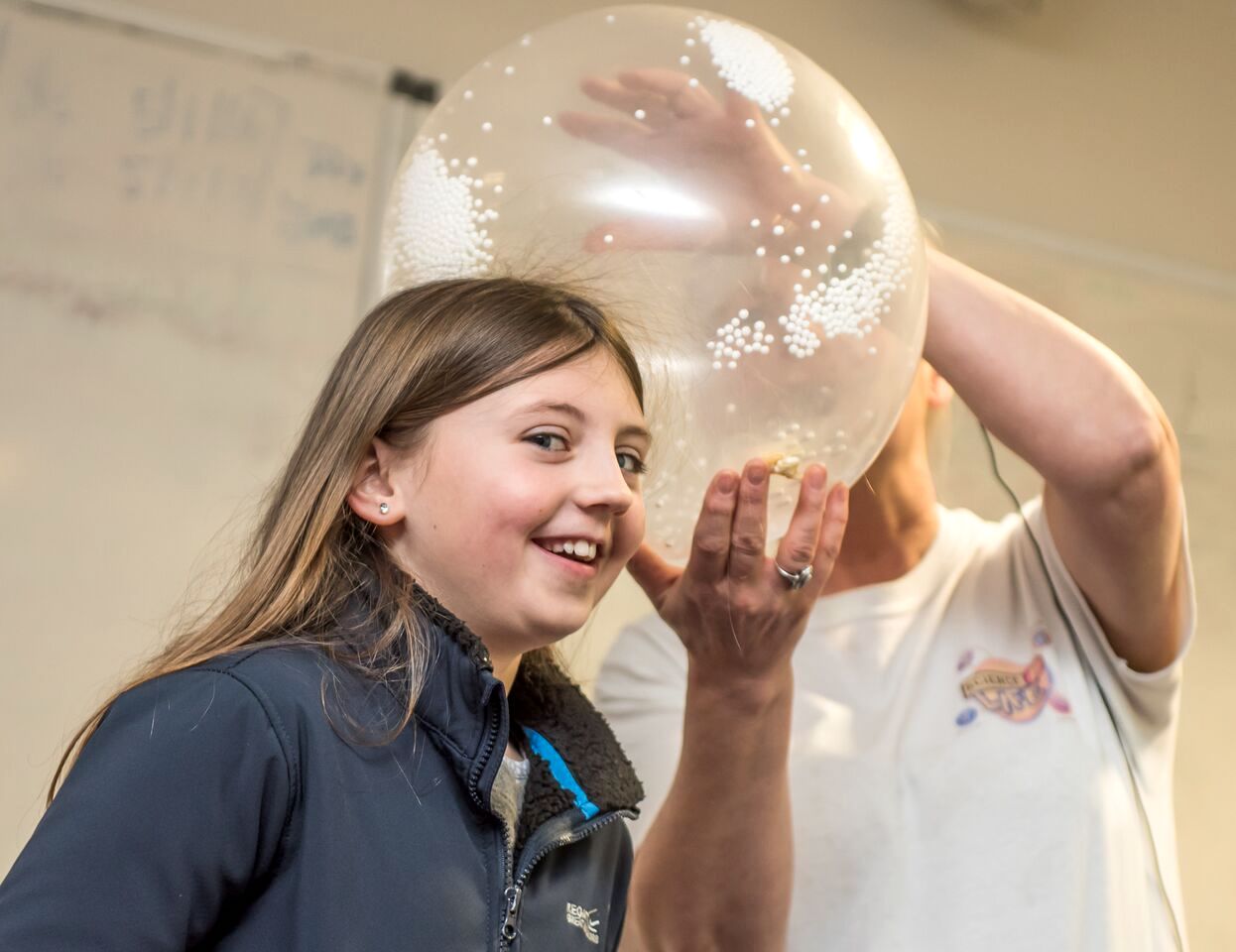
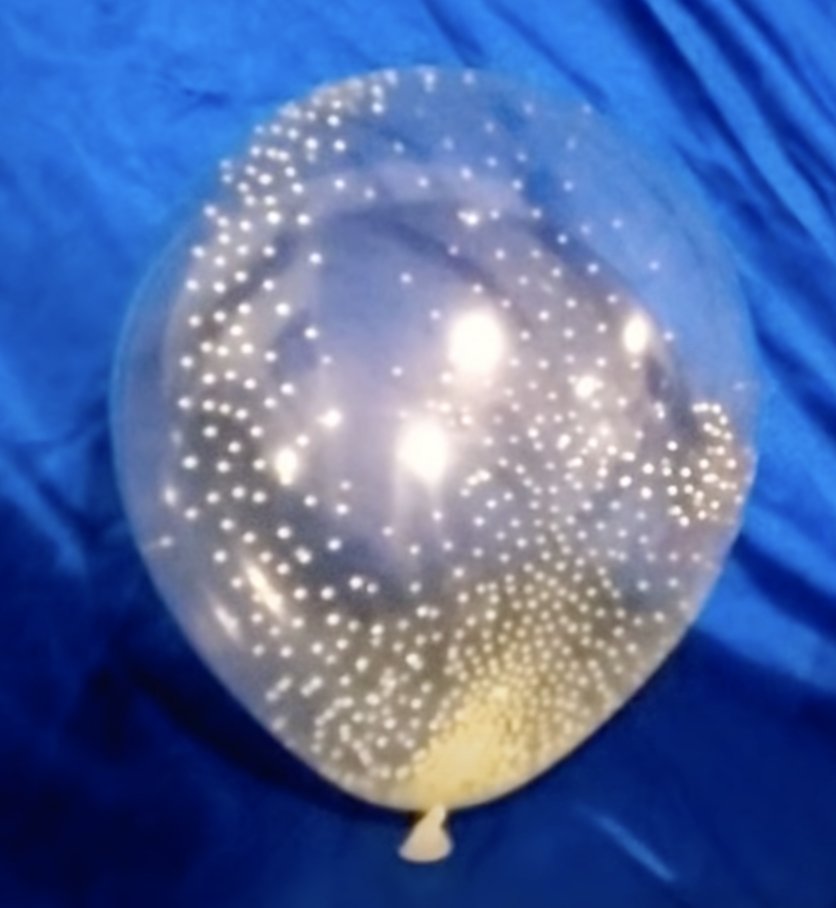
The charged balloon is rubbed on hair, causing the polystyrene beads inside to stick to the rubbed areas due to static electricity.
- Size: 30 cm (12 inches)
- 5 pack transparent balloons
- Made from natural rubber latex
- Bag of polystyrene beads
STATIC ELECTRICITY DEMONSTRATION
Includes Exclusive Science2Life Educational Notes
Every Storm in a Balloon kit includes access to a detailed Science2Life activity guide, sent by email after purchase.
The guide explains how to get the best results from your kit and includes:
- step-by-step instructions
- secrets for success
- the science of static electricity
- an extra Jumping Pepper activity
- links to electric fields, forces, thunderstorms, lightning and thunder
- challenge questions for curious young scientists
These notes have been written by Scientific Sue to help parents, teachers and young scientists turn a simple balloon activity into a memorable hands-on science investigation.
Secrets for Success
Filling the Balloon
To make it easier to get the polystyrene beads into the balloon, cut the top section from a clean, dry 500 ml plastic drinks bottle and use it as a funnel. This simple trick makes filling the balloon quick and mess-free.
Inflating the Balloon
Use a balloon pump rather than blowing into the balloon yourself. Moisture in our breath prevents static charge from building up effectively. Water vapour prevents the build-up of static charge.
The demonstration works well with a standard balloon pump, but for maximum effect we recommend using a larger pump. The extra airflow helps the beads move more vigorously inside the balloon, creating a much more dramatic “storm” effect.
Don’t Overinflate
Only inflate the balloon until it is round and firm. Overinflating weakens the latex and increases the risk of the balloon bursting.
Storage
Store your balloons in a cool, dark place away from direct sunlight. Sunlight and ozone gradually oxidise the latex, weakening the balloon and reducing its lifespan.
Science in a Nutshell
When insulating materials – in this case the latex balloon and the polystyrene beads – rub against each other, they may become electrically charged. When two insulating materials rub against each other, electrons move from one material to the other. The material that gains electrons becomes negatively charged, while the material that loses electrons becomes positively charged.
The rubber balloon loses its electrons to the polystyrene beads.

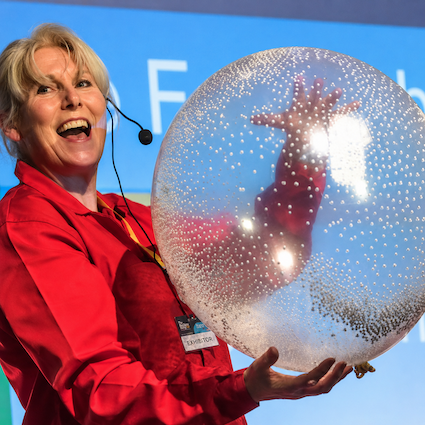
Scientific Sue holds a charged balloon to demonstrate static electric forces during an Intel science event for students.
Like charges repel each other – this is why the polystyrene beads spread out on the inside surface of the balloon.
Opposite charges attract – this is why the polystyrene beads stick to the surface of the balloon.
When you rub the balloon against your hair, electrons move from the hair to the balloon, creating a build-up of static charge. The balloon and the hair then have opposite charges. When you slowly lift the balloon away from the hair the electric force of attraction is strong enough to lift the hair.
The size of this force decreases with distance so as you keep moving the balloon away from the hair the hair will eventually drop. However, when you then bring the balloon closer to the head the hair will then spring back up!
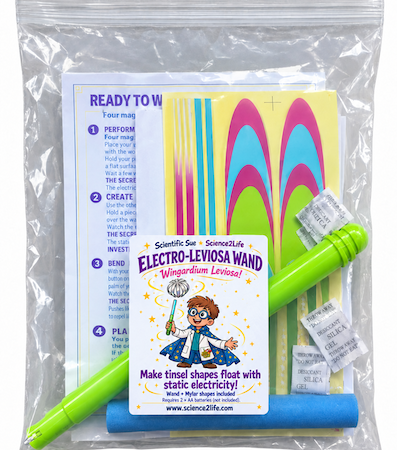
We also sell a wonderfully magical toy called a Electro-Leviosa Wand which uses electrostatic pushing forces to get tinsel shapes to fly about the room like magic! Want to find our more? Click on link.