
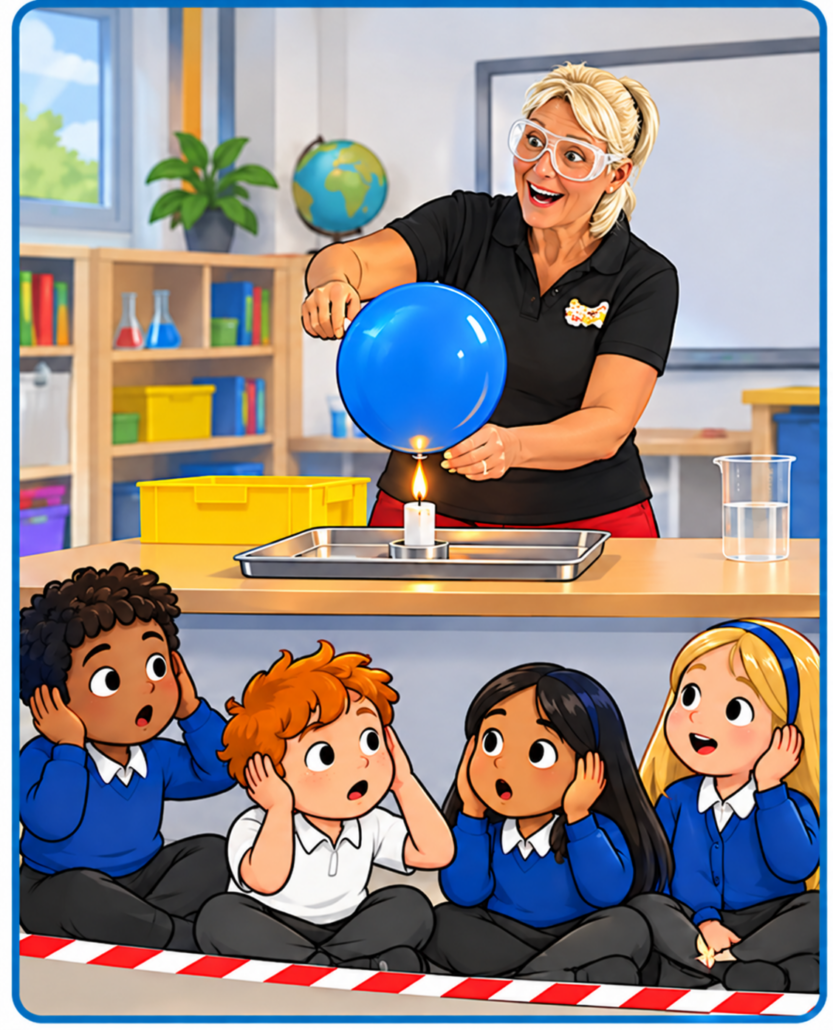
The Heatproof Balloon: A Little Water, a Big Surprise!
Join Scientific Sue behind the scenes of a Curious Minds filming day—and discover how a little water inside a balloon can help us explore the science of our oceans.
When I arrived at Knocknagrave Environmental Centre in County Monaghan, the car park was full. Filming equipment was everywhere. But there wasn’t a child—or an adult—in sight.
Very mysterious!
Then I heard laughter.
I followed the path around the building, through a willow walkway, and there they were: the children and film crew gathered around the pond, finishing a piece of filming. Mystery solved!
We headed inside to prepare for my contribution to Research Ireland’s Curious Minds videos for Science Week: a show-stopping science demonstration involving a balloon, a flame and a rather surprising role for water.
Download the activity guide
Want to explore the science with your class or family? I’ve prepared a free Heatproof Balloon Activity Guide with step-by-step preparation, questions to encourage discussion, explanations for different ages, and links to primary science and geography with Junior Cycle extensions.
Heatproof Balloon Activity – Teacher Guide.pdf | Scientific Sue
The flame demonstration is adult-led. Please read the guide’s preparation and safety notes before attempting it.
A fitting setting for a watery adventure
Knocknagrave Environmental Centre, in Tydavnet, was a lovely setting for a filming day inspired by Water: From Molecule to Ocean, the theme of Science Week 2026.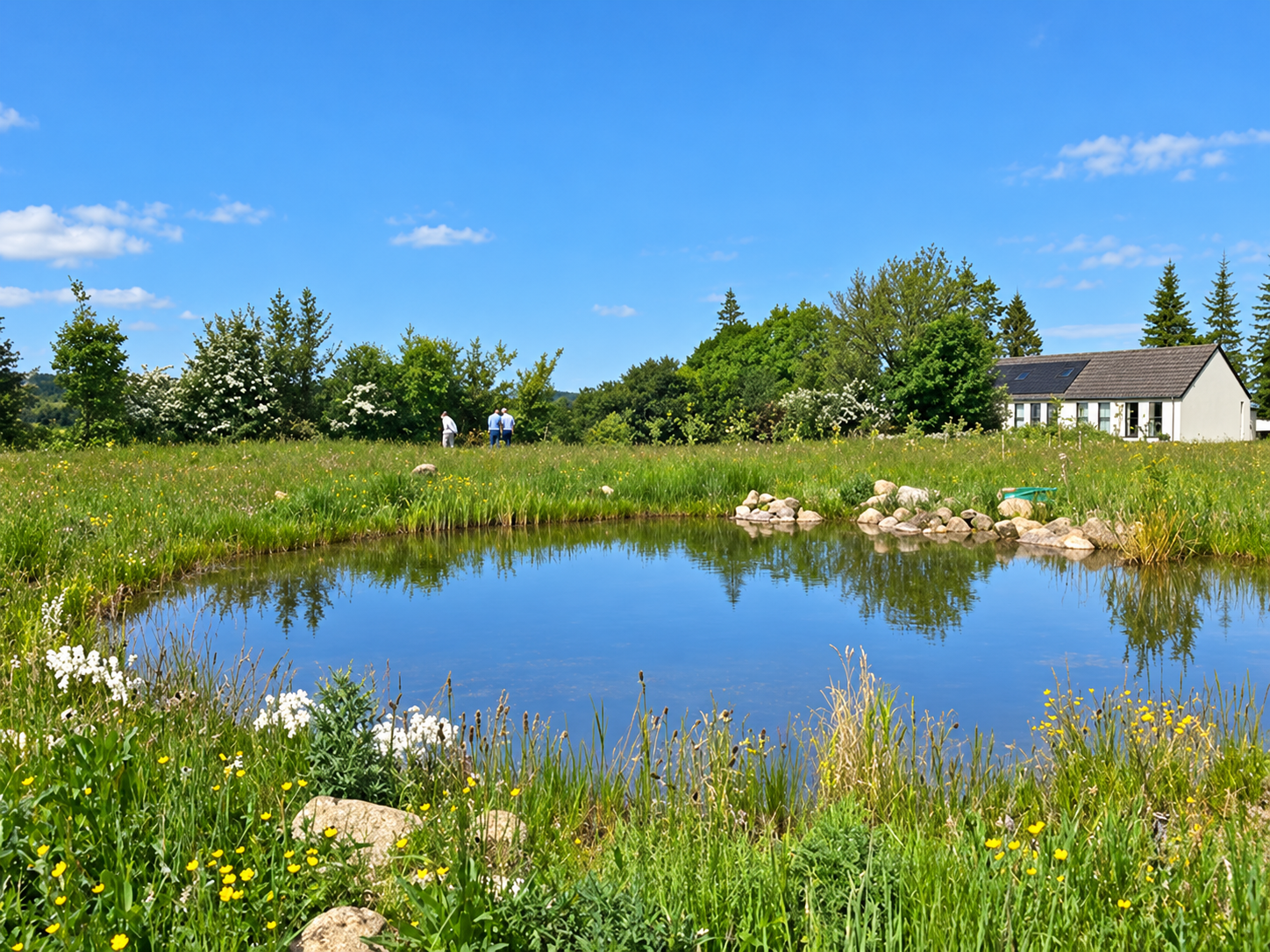
Developed by Tydavnet Group Water Scheme on the site of a former national school, the centre brings together learning about water quality, conservation and biodiversity. Its garden and wildlife ponds make those connections visible: water is part of the living world all around us.
And on this occasion, it was about to become the secret ingredient in a balloon demonstration!
Joining me were eight children from a local school. There was a lovely connection already: they had seen me perform the previous year during a school visit. This time, they were taking part in the filming themselves.
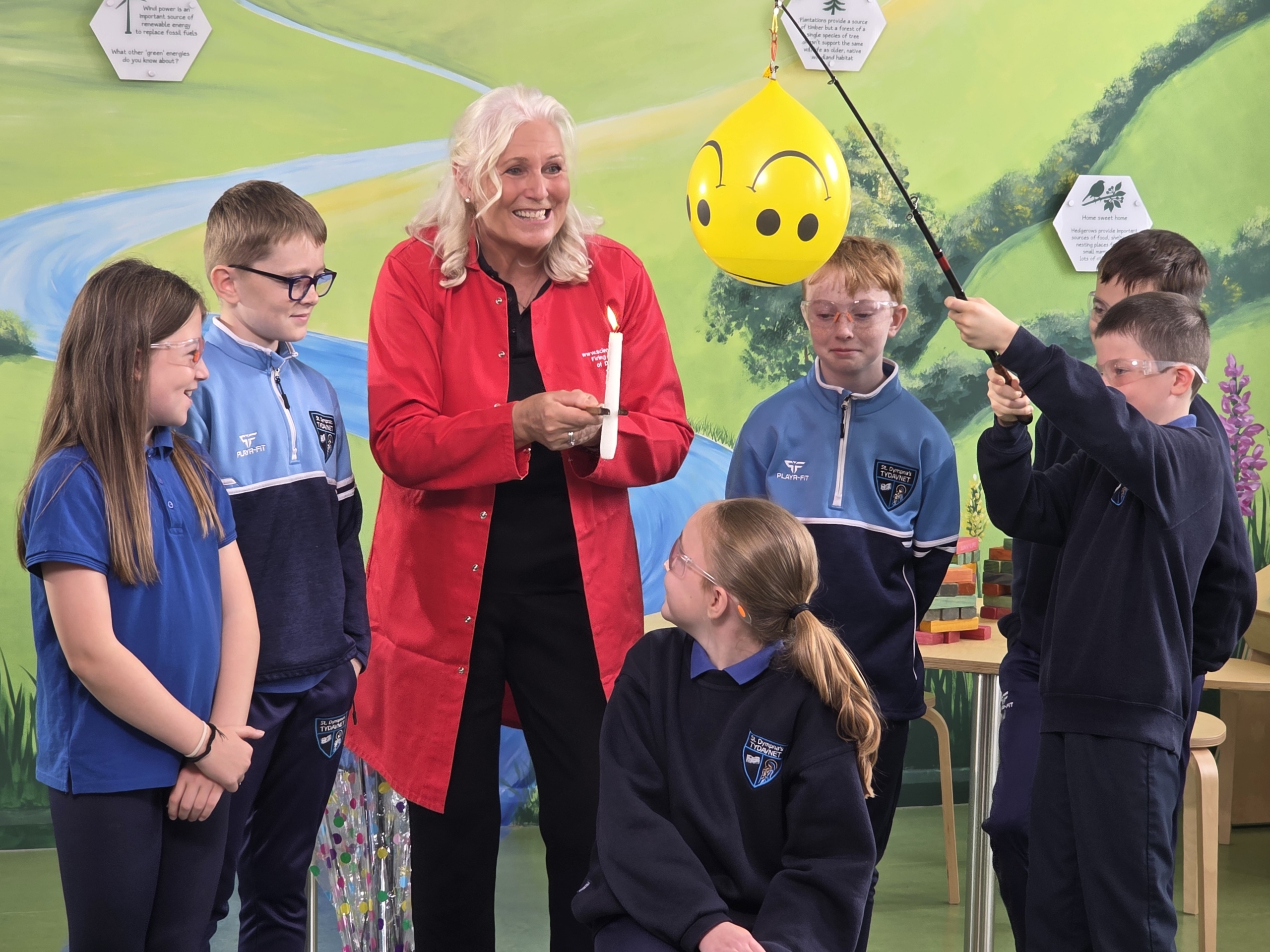
A balloon and a candle… what do you predict will happen? Scientific Sue introduces the demonstration to a young volunteer.
A balloon, a flame… surely it will pop?
Bring an ordinary air-filled balloon into contact with a candle flame and the result is usually immediate.
POP!
But put some water inside the balloon and heat the rubber directly beneath that water, and something very different can happen. The balloon can remain intact while the flame touches its base.
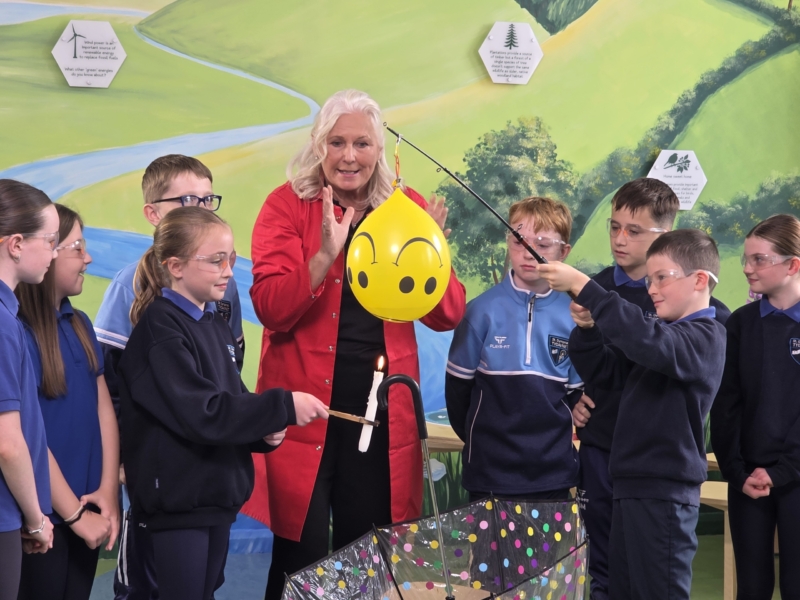
Waiting for the pop… but the balloon stays intact! The water hidden inside helps protect the rubber by absorbing heat.
It looks impossible. Which makes it a wonderful starting point for scientific thinking.
Is it a special balloon? Is there something different about the flame? What could be happening inside?
In the activity guide, I begin with an opaque balloon so the water stays hidden. Children make predictions, observe what happens and suggest explanations. A second balloon, inflated with air in front of them, provides a comparison.
Then comes another clue: gently shake the mystery balloon and listen.
That sloshing sound gives the secret away!
The joy of the demonstration is the opportunity to change your mind. As new evidence appears, children can revisit their first explanation and build a better one.
What is the water doing?
For younger children, I explain it like this:
“The water takes in heat from the candle, helping to stop the rubber getting too hot. Water needs lots of heat to warm up, so it protects the balloon for a while.”
For those ready to explore further, energy passes through the thin rubber into the water. Water warmed near the flame rises, and cooler water moves into its place. These convection currents help carry energy away from the heated area.
Water also has a high specific heat capacity: it takes a substantial amount of energy to raise its temperature. Together, these effects help keep the rubber cooler during brief heating.
The balloon is not truly heatproof. It can still burst, particularly if the flame touches rubber above the waterline, where there is no water against the inside to carry energy away.
From a little balloon to a great big ocean
If a little water inside a balloon can absorb energy from a flame, imagine how much energy an ocean can store!
Our oceans take in energy and release it again over time. Their enormous mass, together with water’s high specific heat capacity, means they can store vast amounts of energy while their temperature changes relatively slowly. Mixing and ocean currents help distribute that energy.
This matters here in Ireland. The Atlantic helps moderate our temperatures, softening winter cold and summer warmth. Winds carry its influence inland—even to places such as Monaghan.
The balloon gives us a small starting point for understanding one part of that much bigger picture. Ireland’s climate also depends on factors including latitude, winds, ocean circulation and altitude.
From the water hidden inside a balloon to the ocean surrounding our island, there is plenty to investigate.
Keep the curiosity going
Whether you are a teacher, parent or another curious grown-up, you do not need to begin with all the answers. Start with a question and give children time to think.
- What do you predict will happen—and why?
- What did you notice that changed your mind?
- Why does it matter where the water touches the balloon?
- How might the sea affect temperatures where we live?
The downloadable guide helps you take those questions further, with practical details, clear explanations and suggestions for extending the learning.

Thank you to Research Ireland’s Curious Minds team, everyone at Knocknagrave Environmental Centre, and the eight young participants who shared this filming day with me.
I’ll add photographs from the shoot here when they arrive, along with a link to the Curious Minds video when it is released.
Until then, keep asking questions. Sometimes a little water and a surprising balloon are all it takes to start a much bigger conversation.
Susan Carvell — Scientific Sue
Founder of Science2Life
Sparks of imagination are at the heart of creativity!
