
Description
🐉 The Science of Dragons
A Virtual Dragon Trainer Classroom Experience
🐉 The Science of Dragons
A Virtual Dragon Trainer Classroom Experience
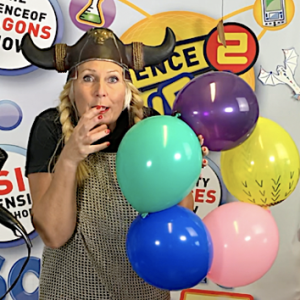
The Science of Dragons is an interactive classroom adventure from Science2Life in which pupils become Dragon Trainers, scientists and engineers as they investigate the behaviour of dragons through hands-on experiments alongside Scientific Sue.
Across six Dragon Training Missions, pupils explore:
🔥 forces and motion
🌈 colour-changing chemistry and camouflage
🧪 acids, alkalis and neutralisation
💨 invisible gases and the fire triangle
🚀 gas-powered rocket launches
⚖ balance and centre of mass
Through story, imagination and practical investigation, pupils discover how science explains the dragon world — and how the same ideas are at work in their everyday lives.
This is not just a video.
It’s a classroom dragon-training mission where Scientific Sue leads the adventure on screen while you guide your class through the investigations in real time.
🎬 How the experience works
Scientific Sue leads the mission on screen while you lead the investigations in your classroom, making this a flexible experience that adapts to your pupils and timetable.
You prepare simple experiment trays in advance using the activity box provided and the step-by-step guidance in your teacher notes.
During the mission:
✔ pupils predict
✔ volunteers assist experiments
✔ the whole class observes results
✔ follow-up investigations extend learning
You control the pace completely.
Pause. Replay. Repeat. Extend.
Run the experience:
⚡ in one exciting session
📚 across several lessons
👩🔬 with volunteers only
👨🔬 or as a full class practical workshop
The activity is totally flexible!
📦 What you receive
When you book the Science of Dragons experience, you’ll receive access to your Dragon Trainer Command Centre — a dedicated resource page containing everything you need to run the mission smoothly in your classroom.
Inside your Command Centre you’ll find:
🎬 your Science of Dragons mission video
📘 the Dragon Trainer Classroom Field Guide
🎓 the teacher preparation guidance video
🎭 printable Viking helmet and dragon mask templates
🐉 character and dragon information sheets
📄 classroom extension worksheets
🧪 investigation follow-up ideas
Your mission video is supplied both inside your Dragon Trainer Command Centre and as a downloadable file so it can be uploaded to your school’s preferred learning platform and reused across classes.
New extension materials are added regularly — so you are encouraged to revisit your Command Centre throughout the year.
Your Command Centre brings together all videos, printable resources, and teaching guidance in one place so the experience is easy to prepare, deliver, and revisit whenever you choose.
There is no expiry date on your access.
Use the experience whenever it suits your timetable.
📘 Teacher Notes That Go Beyond the Video
Your Science of Dragons experience includes a structured Dragon Trainer Classroom Field Guide designed to support classroom science long after the mission video ends.
Inside the guide you’ll find:
✔ tray-by-tray preparation checklists for each mission
✔ step-by-step experiment setup guidance
✔ suggested prediction questions to ask pupils
✔ volunteer management support
✔ clear science explanation notes
✔ links between the story world and real science concepts
✔ ideas for extending investigations into future lessons
Many teachers continue using these six investigations as part of their science teaching year after year.
🧪 What’s inside your Dragon Science Kit
Your kit contains the key specialist materials needed to run the Dragon Training Missions.
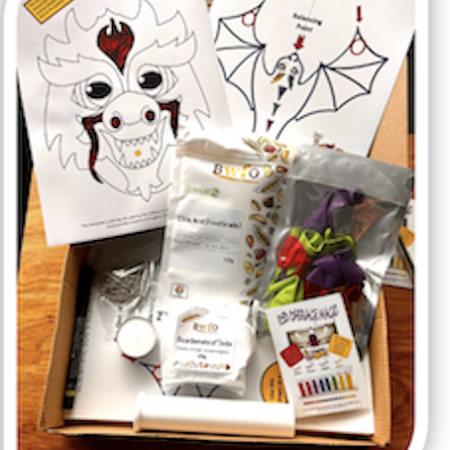
Contents include:
• dried red cabbage indicator + pH colour card
• citric acid
• baking soda
• linking balloons
• dragon face template
• marker pen
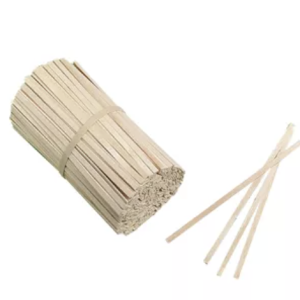
• wooden splints
• tube of effervescent tablets
• paper clips
• tea light candle and matches
• balancing dragon templates
All materials are classroom-friendly and designed to work alongside simple equipment already available in school.
Clear tray-by-tray preparation guidance is included in your teacher notes to help you organise each mission with confidence — even in a standard classroom rather than a science lab.
👩🏫 Running the experience with more than one class?
Each Science of Dragons kit supports one class of up to 30 pupils.
If you’d like to run the Dragon Training Mission with additional classes or year groups, extra classroom kits are available here:
👉 Order additional classroom kits
https://www.science2life.com/product/science-of-dragons-experience-extra-classroom-kit/
🐉 Planning to train more than one class?
Many schools choose to run the Dragon Training Mission across year groups or as part of:
🧪 Science Week
📚 Book Week
⚙ STEM Days
🐉 themed literacy projects
Contact Sue for multi-class bundle options and school discounts
📧 scientificsue@science2life.com
🐉 The Dragon Training Missions
Each mission builds on the last, helping pupils develop scientific understanding step by step while strengthening their investigation skills throughout the experience.
Mission 1 – Toothless Flies Again
Investigate weight and balanced forces
Can your Viking volunteers help keep Toothless flying?
In this mission, pupils discover how an upward push from moving air can balance the downward pull of weight.
Using a hairdryer, Scientific Sue helps you create a fast-moving airstream that lifts the dragon into the air. When the upward force of the airflow balances the downward force of gravity, the balloon dragon becomes stable — hovering, spinning and moving in the air current.
Once Toothless is flying steadily…
⚔ your brave Viking volunteer must try to knock the dragon out of the sky and capture it for training!
Pupils explore:
✔ weight as a force
✔ balanced and unbalanced forces
✔ the effect of moving air on objects
✔ how stability depends on forces acting in opposite directions
Mission 2 – Stormfly’s Spectrum
Investigate colour change chemistry using natural indicators
Stormfly is a colour-changing dragon — her colour depends on her mood!
Pupils explore how a natural indicator made from red cabbage changes colour when different substances are added.
Using the Dragon Trainer chemistry kit, pupils create:
🔴 red (acidic solution using citric acid)
🔵 blue (alkaline solution using baking soda)
In the mission video, Scientific Sue reveals even more dramatic colour changes:
🟡 yellow (with a strong alkali)
🟢 green (with washing soda)
Pupils become Dragon Mood Detectives, linking colour changes to Stormfly’s changing emotions.
They explore:
✔ acids and alkalis
✔ natural pH indicators
✔ colour change reactions
✔ observation and prediction skills
✔ how scientists use indicators to identify substances
Mission 3 – Science Showdown
Neutralise a dragon’s acidic spit
Pupils discover what happens when an acid and an alkali are mixed together.
Using Stormfly’s colour-changing indicator from Mission 2, pupils combine:
🔴 citric acid solution
🔵 baking soda solution
When mixed in the correct ratio:
- bubbles form rapidly as carbon dioxide gas is released
- the solution returns to purple, showing the mixture has become neutral — evidence that the acid and alkali have balanced each other and the reaction is complete
This process is called neutralisation.
Pupils explore:
✔ what acids and alkalis are
✔ the meaning of neutralisation
✔ how gases can be produced in chemical reactions
✔ how indicators show chemical change
✔ how scientists recognise when reactions are complete
Mission 4 – Unmask the Gas
Identify an invisible dragon fire type
In Mission 3, your Dragon Trainers produced a mysterious invisible gas.
Now it’s time to investigate it.
Using citric acid, baking soda and water, the class recreates the reaction inside a bottle (the dragon’s “stomach”) to capture the gas safely.
When the gas is carefully poured over a lit candle…
✨ the flame goes out instantly!
Your pupils discover this invisible dragon fire is carbon dioxide — a heavy gas that flows downward and removes oxygen from a flame.
This investigation gives pupils a rare opportunity to observe an invisible gas behaving like a liquid that can be poured, making the concept memorable and easy to understand.
They explore:
✔ carbon dioxide is produced during reactions
✔ carbon dioxide is heavier than air
✔ gases can sometimes be “poured”
✔ flames need oxygen to keep burning
✔ removing oxygen stops a fire
This links directly to the fire triangle
🔥 heat
🔥 fuel
🔥 oxygen
Remove one — and the fire goes out.
Mission 5 – Blast Off!
Launch chemical rockets with Meatlug
Gronckle dragons like Meatlug spit out fiery exploding projectiles.
Could this really happen?
Using effervescent tablets, pupils recreate the same gas-producing reaction explored earlier.
When the tablet is dropped into water and the lid is secured:
💥 carbon dioxide gas is produced
📈 pressure builds inside the container
🚀 the lid launches into the air like a rocket
Because this mission builds directly on earlier investigations, pupils experience how scientists use previous results to support new discoveries.
They explore:
✔ gas production
✔ expansion of gases
✔ pressure build-up
✔ how gas pressure creates movement
✔ how chemistry can be used to create propulsion
In the mission video, Scientific Sue demonstrates how calcium carbide produces acetylene gas, launching a Viking ship from the water — showing how dragon stories are inspired by real science and engineering ideas.
Perhaps Cressida Cowell really is a secret scientist…
Mission 6 – Balance & Spin
Engineer a perfectly balanced dragon spinner
Can your Dragon Trainers help their dragon balance on its nose?
Pupils adjust the dragon template by adding paper clips or coins to shift the centre of mass until perfect balance is achieved.
Once balanced…
💨 a gentle blow sets the dragon spinning through the air!
They explore:
✔ centre of mass
✔ weight distribution
✔ stability and balance
✔ testing and improving designs
✔ engineering through trial and observation
This makes the activity an ideal introduction to classroom engineering thinking as well as physics.
📚 Science Meets Story and Reading for Pleasure
Many pupils already know the How to Train Your Dragon films — but fewer have discovered the original books by Cressida Cowell.
The Science of Dragons experience helps pupils connect story with science, encouraging curiosity about how dragons might really work and inspiring interest in reading the books themselves.
Research shows that children who read for pleasure make stronger progress in vocabulary, spelling and even mathematics — making this experience a valuable link between science and literacy.
🧪 Scientific Thinking Skills Developed Throughout the Dragon Training Missions
Across the six missions, pupils practise the same investigation skills used by real scientists:
👀 observing
🔮 predicting
📏 measuring
🧩 classifying
🧠 inferring
📊 evaluating
These skills are embedded naturally throughout the experience and are fully supported in the accompanying Dragon Trainer Classroom Field Guide, allowing teachers to revisit and extend investigations long after the video mission has finished.